
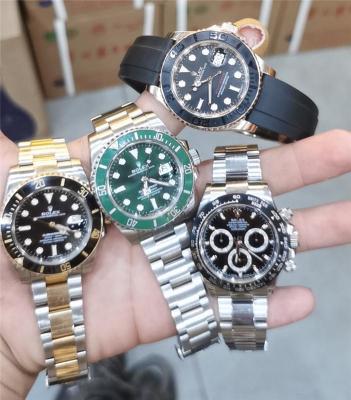
Rolex sits at the center of the watch conversation whether people like it or not. Mention the Explorer or the Daytona in a room full of enthusiasts and somebody will immediately start talking about waitlists, proportions, or why the older references were supposedly better. That’s just how it goes.

Still, not everyone wants the obvious choice. Some collectors already own a Rolex and want something with a different personality. Others simply don’t feel like paying current market prices for a stainless steel sports watch. Fair enough.
So we picked ten watches that capture at least part of the appeal of the Explorer and Daytona without feeling like direct copies. Some are affordable. Some absolutely are not. A few lean vintage. Others feel very modern. That mix is what makes this kind of list fun in the first place.
And honestly, narrowing it down to five alternatives for each model was harder than expected.
Five Great Alternatives To The Rolex Explorer
The modern Rolex Explorer remains one of the cleanest everyday watches on the market. No rotating bezel. No unnecessary text. Just the familiar 3-6-9 dial and that understated “go anywhere” personality replica Rolex has refined for decades.
The current lineup comes in both 36mm and 40mm sizes, which helps. But it also means the Explorer now competes with a surprisingly broad range of watches.
These five stood out to us the most.
Explorer Alternatives At A Glance
| Watch | Case Size | Movement | Power Reserve | Price |
|---|---|---|---|---|
| IWC Pilot’s Watch Mark XX | 40mm | IWC Cal. 32111 | 120 hours | €6,900 |
| Tudor Ranger | 36mm / 39mm | MT5400 / MT5402 | 70 hours | From €3,520 |
| Omega Railmaster | 38mm | Omega Cal. 8806 | 55 hours | €6,100 |
| Nomos Club Sport Neomatik | 34mm / 37mm / 39mm | DUW 3001 | 43 hours | From €2,600 |
| Christopher Ward C65 Dune Aeolian | 38mm | Sellita SW200-1 | 38 hours | €1,165 |
IWC Pilot’s Watch Mark XX
The IWC Mark series has quietly become one of the safest recommendations in modern watchmaking. Maybe too safe, some would argue. But there’s a reason enthusiasts keep circling back to it.
The current Mark XX feels refined in a very unflashy way. Put it on the bracelet and it suddenly makes a lot of sense. The five-row design gives the watch more character than older generations ever had, and comfort is genuinely excellent. You notice it after about five minutes on the wrist.
For this list, the black-dial version is the obvious pick. The blue and green models look great too, though they drift further away from the Explorer formula.
The case measures 40mm wide and just 10.8mm thick, which helps the watch wear flatter than many modern sports watches. On paper, 49mm lug-to-lug sounds slightly long. In reality, it’s manageable unless your wrist is particularly small.
The dial layout is classic IWC pilot territory. Big Arabic numerals. Clear minute track. Strong legibility from basically any angle. Unlike the Explorer, though, you also get a date window at 3 o’clock. Some people still refuse to accept a date complication on a minimalist field-style watch. Others genuinely don’t care.
I’m probably somewhere in the middle.
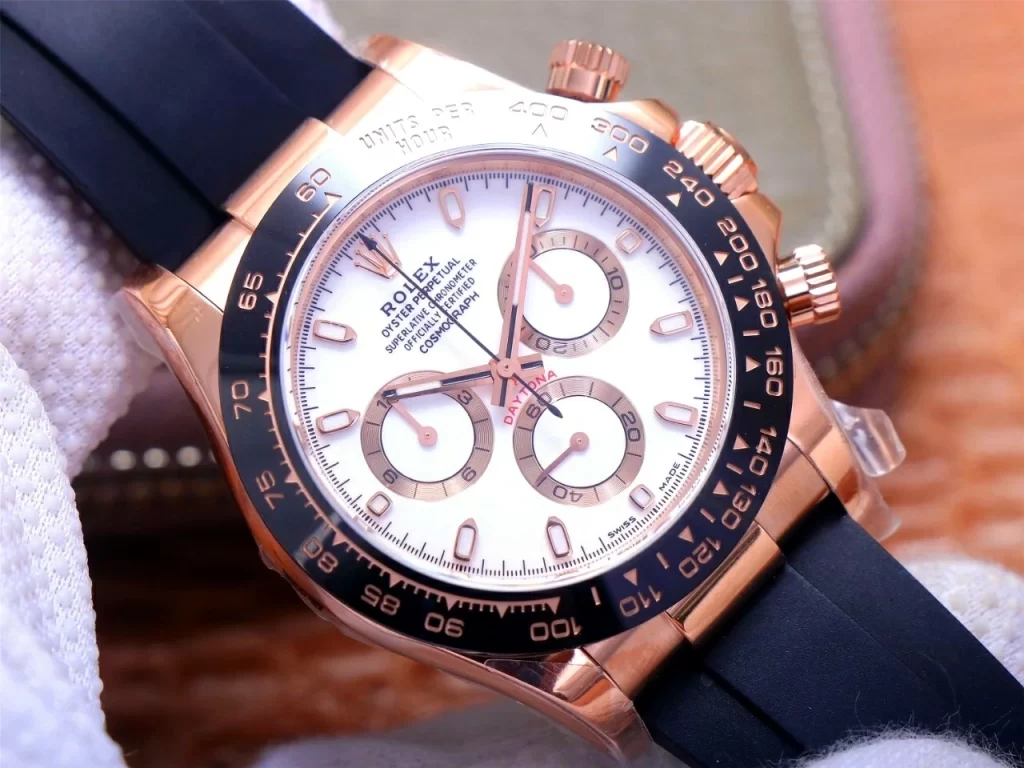
Inside sits the IWC caliber 32111, a ValFleurier-produced automatic movement with a huge 120-hour power reserve. That’s one of those specs you stop thinking about until you rotate watches for a few days and realize the thing is still running Monday morning.
There’s also the smaller Pilot’s Watch Automatic 36 if the Mark XX feels too large. Same overall vibe, slightly more compact proportions, and honestly, it may be the better daily wearer for many people.
Tudor Ranger
This one was inevitable.
The Tudor Ranger has always lived in the Explorer’s shadow a little, although the current version actually leans much harder into vintage Rolex Explorer ref. 1016 territory than the modern Explorer itself does. That’s partly what makes it appealing.
Last year Tudor expanded the Ranger lineup with new 36mm versions, including black- and beige-dial models. And after spending time with them, the smaller case simply feels right. The 39mm Ranger is still good, but the 36mm version has better balance overall.
Funny enough, that mirrors the debate happening around the modern Explorer too.
The Ranger keeps things simple:
- brushed steel case
- matte dial
- oversized Arabic numerals
- highly legible handset
Well… mostly beloved handset. The shovel-style hour hand still divides people. Some enthusiasts genuinely dislike it. Others think it gives the watch personality. Personally, I stopped noticing it after a day or two.
The 36mm version uses Tudor’s MT5400 movement, while the 39mm gets the MT5402. Both are COSC-certified chronometers with 70 hours of power reserve, and Tudor’s recent movements have earned a pretty strong reputation for reliability.
One detail worth mentioning: the bracelet.
Unlike many Black Bay models, the Ranger skips the faux rivets entirely. Good decision. The cleaner bracelet suits the watch far better and gives it a more modern feel without ruining the vintage inspiration.
At around €3,500, the Ranger also sits in an interesting spot. It’s not “cheap” anymore — let’s be honest about modern watch pricing — but compared to current Rolex market realities, it starts looking very reasonable.
Omega Railmaster
The Railmaster has quietly become one of Omega’s most underrated watches.
Historically, it competed more directly with the Rolex Milgauss. Both emerged during the 1950s as tool watches aimed at engineers and scientists working around magnetic fields. Today, though, the Railmaster feels much closer in spirit to the Explorer.
Especially the gray-dial version.
The current model uses the same 38mm case architecture as the Aqua Terra, but the overall personality is completely different. Less polished. Less luxury-adjacent. More straightforward tool watch.
And honestly, that helps.
The dial design works particularly well here. The gradient gray surface, luminous triangular markers, and oversized 3-6-9 numerals give the replica watch a slightly rugged look without pushing into faux-vintage territory. Omega could’ve easily overdone this watch. Somehow they didn’t.
Wearability is excellent too. The 45mm lug-to-lug measurement keeps the proportions compact, and the bracelet is one of those designs that disappears on the wrist after a while.
Inside sits Omega’s Co-Axial Master Chronometer caliber 8806, certified by METAS and resistant to magnetic fields up to 15,000 gauss. That anti-magnetic capability isn’t just marketing fluff either. Omega has leaned heavily into that technical side over the past decade, and few brands currently match them there.
What’s interesting is how different the Railmaster feels compared to the Aqua Terra despite sharing so much hardware underneath. The Aqua Terra feels polished and contemporary. The Railmaster feels almost stubbornly utilitarian.
For many enthusiasts, that’s exactly the point.
Nomos Club Sport Neomatik
Nomos approaching the Explorer concept was never going to produce a traditional-looking watch.
Thankfully.
The Club Sport Neomatik brings a very different personality to this category, and depending on your taste, it may actually feel more refreshing than the obvious Swiss alternatives.
That said, sizing matters here.
The black-dial 42mm model exists, but the long lugs make it wear noticeably larger than the numbers suggest. For most wrists, the 37mm or 39mm versions are probably the sweet spot.
The gray “Smoke” dial in the 39mm lineup comes closest to classic Explorer territory, although even then, the watch still looks unmistakably Nomos. The typography alone gives it away instantly.
That’s part of the charm.
The polished case, thin bezel, and clean dial layout create a lighter, more modern feel than the rugged watches elsewhere on this list. Yet the Club Sport still has enough robustness to function as a genuine daily wearer.
Inside is the in-house DUW 3001 automatic caliber. It’s slim, reliable, and beautifully finished, especially if you choose the sapphire display back. Nomos movements always punch above their price category visually. You don’t really expect that level of refinement until you turn the watch over.
And yes, the colorful dials deserve attention too.
The Tabac version in particular has that annoying quality where it stays in your head long after you’ve stopped looking at photos of it. Some watches just do that.
Prices start around €2,600, which feels surprisingly fair given the movement quality and overall finishing.
Christopher Ward C65 Dune Aeolian
Christopher Ward has become increasingly difficult to ignore over the past few years.
The older criticism — decent watches with awkward branding — doesn’t really hold up anymore. The brand has improved rapidly, especially when it comes to case finishing, bracelet quality, and overall coherence.
The C65 Dune Aeolian is a great example.
The updated textured dials give the watch far more personality than earlier versions, and the gray dial works particularly well if you’re chasing subtle Explorer-like versatility.
Dimensionally, the watch is excellent:
- 38mm diameter
- 11.9mm thickness
- 43.7mm lug-to-lug
Those are genuinely wearable proportions.
The Bader bracelet deserves praise too. At this price point, it’s probably one of the best bracelets available. Screw links, on-the-fly micro-adjustment, solid finishing — features that used to belong exclusively to much more expensive watches now show up here.
The Sellita SW200-1 inside isn’t exciting, admittedly. The 38-hour power reserve feels a little dated in 2026. But reliability counts for something, and serviceability matters more than enthusiasts sometimes admit online.
As an affordable everyday sports watch, the C65 Dune simply works.
And at just over €1,100, that matters quite a bit.
Five Strong Alternatives To The Rolex Daytona
The Daytona occupies a strange place in the watch world now.
It’s simultaneously one of the most famous chronographs ever made and one of the hardest modern Rolex models to buy at retail. Even people who aren’t particularly interested in watches recognize it immediately.
That popularity creates a problem though. If you genuinely want a great chronograph rather than specifically a Daytona, the market suddenly opens up in fascinating ways.
These are the five alternatives we’d seriously consider.
Daytona Alternatives At A Glance
| Watch | Case Size | Movement | Power Reserve | Price |
|---|---|---|---|---|
| Omega Speedmaster Calibre 321 | 39.7mm | Omega Cal. 321 | 55 hours | €17,100 |
| Zenith Chronomaster Sport | 40mm | El Primero 3600 | 60 hours | €12,200 |
| Breitling Chronomat B01 42 | 42mm | Breitling B01 | 70 hours | €9,400 |
| Tudor Black Bay Chrono | 41mm | MT5813 | 70 hours | €6,300 |
| Seiko Prospex Speedtimer Solar Chronograph | 39mm | V192 Solar Quartz | 6 months | €750 |
Omega Speedmaster Calibre 321 “Ed White”
If the Explorer discussion creates arguments among enthusiasts, the Daytona versus Speedmaster debate basically guarantees one.
The Speedmaster Calibre 321 “Ed White” isn’t trying to compete directly with the Daytona stylistically. But emotionally? Different story.
Omega went unusually deep when recreating the legendary caliber 321. The movement is assembled twice by a single watchmaker, adjusted, disassembled, cleaned, and then rebuilt again. That process sounds slightly obsessive. It probably is.
But the result feels special in a way mass-produced luxury watches sometimes don’t.
The straight-lug 39.7mm case stays remarkably faithful to the original Speedmaster 105.003 worn during NASA’s early Gemini missions. Put the watch side by side with a regular Moonwatch and the differences become obvious surprisingly quickly. The case lines are sharper. The finishing is richer. Even the dial texture feels more nuanced.
Then there’s the movement itself.
Turn the watch over and the Sedna Gold-plated caliber 321 completely steals the show. Omega clearly understood enthusiasts would spend an unhealthy amount of time staring at it through the sapphire caseback.
And honestly? They were right.
At over €17,000, this isn’t exactly an attainable alternative. But compared to current secondary-market Daytona pricing, it starts making a lot more sense than it initially sounds.
Zenith Chronomaster Sport
The “Zaytona” nickname followed the Chronomaster Sport around immediately after launch. Some people still use it. A little unfairly, perhaps.
Yes, the visual similarities to the Daytona were obvious at first. Ceramic bezel. Compact chronograph layout. Oyster-style bracelet. Nobody missed the comparison.
But over time, the watch established its own identity.
Part of that comes from Zenith’s history with Rolex itself. After all, Zenith supplied modified El Primero movements for the automatic Daytona generation from 1988 through 2000. That connection alone gives the Chronomaster Sport more legitimacy than most Daytona alternatives could ever claim.
The current lineup has also expanded significantly. Ceramic bezels, steel bezels, titanium versions, colorful dials, meteorite dials — there’s far more variety now than people realize.
Still, the classic white or black tricolor-register versions remain the strongest options.
Inside sits the El Primero 3600, a modern evolution of one of the most important automatic chronograph calibers ever made. The movement runs at 36,000 vibrations per hour and measures elapsed time down to 1/10th of a second. More importantly, it just feels alive in operation. High-beat chronographs always do.
And despite early criticism, the Chronomaster Sport has gradually become one of the most widely respected modern Zenith models.
Funny how that happens sometimes.
Breitling Chronomat B01 42
The modern Chronomat shouldn’t work as well as it does.
On paper, the watch sounds slightly excessive:
- 42mm case
- 15.1mm thick
- prominent bezel tabs
- highly recognizable Rouleaux bracelet
Yet once it’s on the wrist, most of those concerns disappear.
Breitling handled the redesign carefully back in 2020. The brand modernized the Chronomat without erasing the slightly loud personality that made the original popular during the 1980s and early ’90s.
The rider-tab bezel remains wonderfully recognizable. Same goes for the bracelet, which still feels unlike anything else in the industry. Some collectors adore it immediately. Others need time to warm up to it.
Either reaction is understandable.
Inside is Breitling’s in-house B01 movement with a healthy 70-hour power reserve and a very solid reputation overall. Over the last decade, Breitling has quietly become much more technically impressive than many enthusiasts give it credit for.
The copper-dial version remains my personal favorite. There’s something unexpectedly warm about it, especially under natural light.
Not every chronograph needs to be monochrome and ultra-serious.
Tudor Black Bay Chrono
Tudor entering this list was almost unavoidable too.
The Black Bay Chrono borrows a fair amount of Daytona energy, especially from vintage manually wound references, but it still feels distinctly Tudor once you spend time with it.
The snowflake hands alone guarantee that.
Compared to the Daytona, the Black Bay Chrono is larger, thicker, and more rugged overall. Some buyers will actually prefer that. Others won’t. Wrist shape matters quite a bit here because the 50mm lug-to-lug gives the watch real presence.
The dial layout also differs noticeably:
- two-register display
- 45-minute counter
- date at 6 o’clock
Purists may complain about the date. Realistically, many owners probably appreciate the practicality.
Inside is the MT5813 movement, based on Breitling’s excellent B01 architecture. Tudor’s collaboration with Breitling still feels slightly surprising in hindsight, although it produced one of the stronger modern chronograph calibers in this price category.
Last year’s addition of the Jubilee-style bracelet changed the watch more than expected too. The older Oyster-style bracelet still suits the Black Bay Chrono better in my opinion, but the five-link bracelet softens the overall look considerably.
The pink and turquoise models created massive hype online, of course. Personally, I still think the reverse panda remains the cleanest execution.
Sometimes the obvious version is obvious for a reason.
Seiko Prospex Speedtimer Solar Chronograph
Every list like this needs at least one genuinely accessible option.
The Seiko Prospex Speedtimer Solar Chronograph fills that role perfectly.
The 39mm versions are especially good because the proportions simply work better than the larger 41mm models. Compact case, balanced dial, comfortable bracelet. Nothing feels overdesigned.
And unlike many affordable chronographs, these watches are actually enjoyable to live with day to day.
The solar-powered V192 movement may lack the romance of a mechanical caliber, sure. But six months of power reserve from a full charge is incredibly practical. No winding. No accuracy anxiety. Just grab the watch and wear it.
Seiko also did a nice job with the dial colors recently. The white panda configuration looks great, but the softer pink and pale green versions add some personality without drifting into novelty territory.
At around €750, the Speedtimer becomes very easy to recommend.
Not because it imitates the Daytona particularly closely. It doesn’t, really.
It’s here because it captures the same sporty, wearable chronograph spirit while remaining attainable for normal people. And honestly, there’s something refreshing about that.
There are obviously dozens of other watches that could’ve made both lists. The TAG Heuer Carrera still deserves consideration. The Baltic Scalegraph Classic is charming in a very different way. And the IWC Pilot’s Watch Chronograph AMG remains one of the cleaner modern aviation chronographs around.